New Zealand's Online Casino Licensing Race Has Started
The Online Casino Gambling Act 2026 is in force, expressions of interest opened on 17 July, the licence auction lands in September — and 1 December is the cut-off for operators that don't apply. Here's the full timeline, what it changes for Kiwi players, and how it changes the way we cover the NZ market.
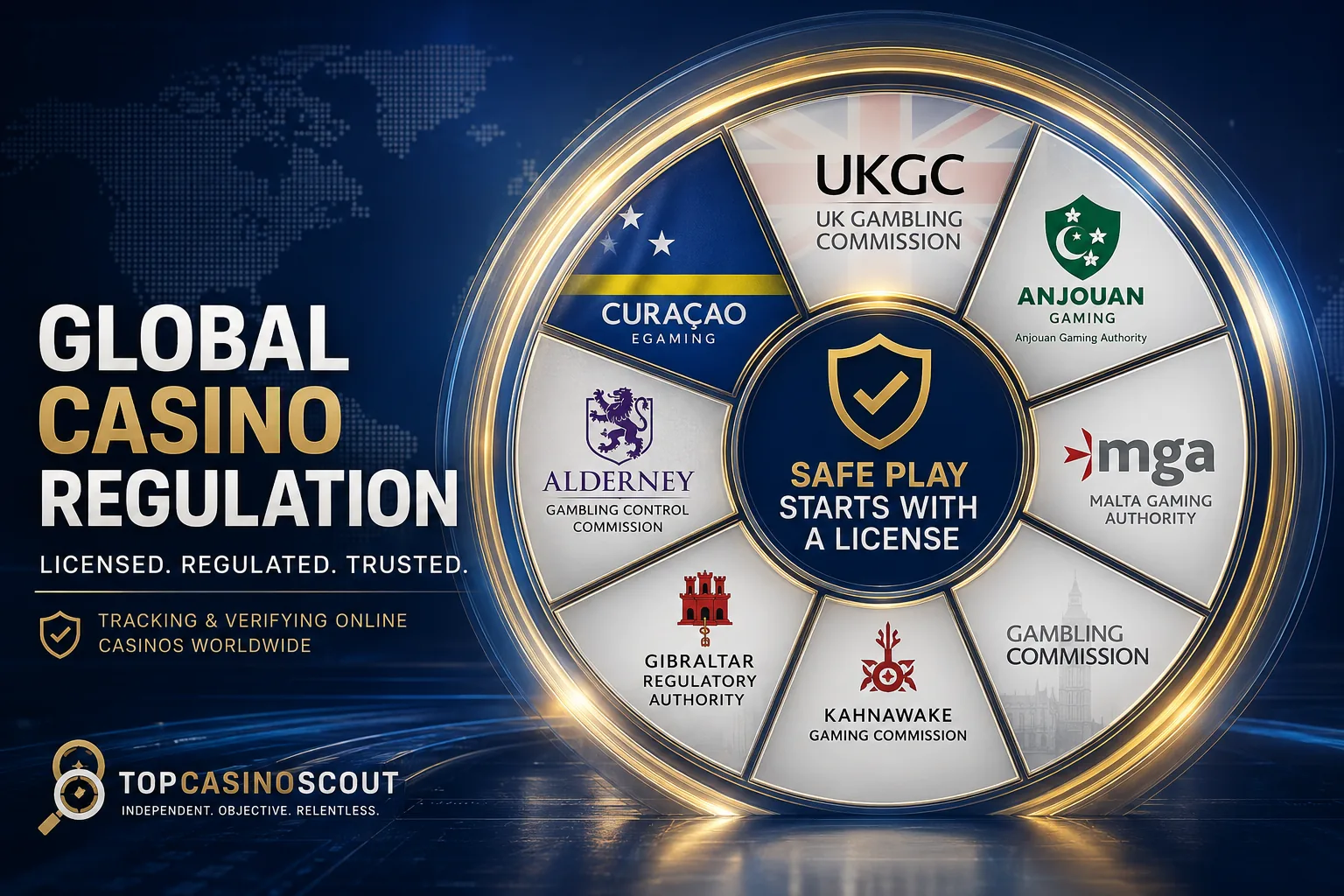
Checking whether a specific casino is legitimately licensed right now? Use the Casino Licence Checker →
For more than twenty years, online casino gambling in New Zealand ran on a peculiar arrangement: not licensed locally, not illegal for players, and served entirely by offshore operators answering to no one in Wellington. That arrangement is now ending on a published timetable. The Online Casino Gambling Act 2026 came into force on 1 May, its operating Regulations followed on 3 July, and on 17 July the Department of Internal Affairs (DIA) opened the expression-of-interest window for the country's first-ever online casino licences. The licensing race is live as you read this.
We've covered the Act's structure in depth in our NZ Online Casino Gambling Act explainer. This page is the news layer: what has actually happened this month, the dates that matter next, and — because it affects how we do our job — what we're changing about our own New Zealand coverage during the transition.
The timetable, as it stands today
Now – 14 August 2026: the EOI window. Applicants pay a NZ$19,000 fee, demonstrate access to at least NZ$7.5 million in capital, and submit full disclosure on ownership, executives and platforms. Executives with dishonesty convictions in the past seven years are automatically disqualified.
September 2026: the auction. Licences — up to fifteen, one brand each, maximum three per operator — go to the highest bidders among approved applicants. Winners are invited to submit full applications from October, covering harm-minimisation, advertising and consumer-protection plans.
1 December 2026: the cut-off. Operators that have not applied for a licence must stop serving New Zealand. Operators with a pending application may continue — but without advertising — until their application is decided. New offshore entrants have already been barred since 1 May.
Early 2027: licences issued and the regulated market launches, with licensed operators bound to player-set spending limits, self-exclusion tools, advertising restrictions, a credit-card deposit ban, a 16% gambling duty (a slice ring-fenced for community causes) and a 3.5% quarterly levy funding regulation and harm services. Breaches by unlicensed operators carry penalties of up to NZ$5 million.
What it changes for players
Three things, concretely. First, playing remains legal for you throughout — the Act targets operators, not players, and gambling on an unlicensed site is not an offence for the individual. Second, the market is about to shrink dramatically: hundreds of brands currently serve New Zealand and at most fifteen will be licensed, which means most familiar sites will end up either withdrawing, applying, or operating illegally from the grey market. Third, licence status becomes the essential player skill of the next eighteen months — an operator willing to serve NZ illegally after the deadlines is telling you exactly how it will treat your withdrawal.
How this changes our coverage — and our operations
We will track the applicant pool. From the moment application outcomes become visible, our New Zealand hub will distinguish three categories of operator: licensed, application pending, and neither — because after 1 December those categories carry completely different risk profiles for players.
NZ licence status is joining our licence checker. Our Casino Licence Checker already verifies casinos against live regulator data from the UKGC, MGA, Curaçao Gaming Authority and others. As the DIA's licensing decisions are published, NZ authorisation status will be added as a first-class signal, so a Kiwi player can see in seconds whether the site they're on is licensed, pending, or operating outside the regime.
We will audit every licensed operator. When the first licences are issued in 2027, every one of the up-to-fifteen licensees will get a full TCS-scored review — same 10,000-point methodology, same worst-case rules, same screenshot evidence — because a licence bought at auction is a market-access purchase, not a quality certificate. The Act legislates harm minimisation; it cannot legislate payout speed, terms fairness or support quality. That remains our job.
And we're adapting to the advertising rules. The Act's blanket ban on advertising unlicensed online casino gambling to New Zealanders applies across the industry, and we take it seriously. Our New Zealand pages are informational and safety-focused by design — licence verification, complaint routes, blacklists and audits — and through the transition we are reviewing our NZ-facing content to ensure it stays firmly on the information-and-protection side of the line the Act draws. Where operators lose the right to serve New Zealand, our coverage of them will say so plainly.
The honest take
This is a good reform arriving with a long, messy middle. Regulated operators, enforced player protections and funded harm services are all wins. But until early 2027, New Zealanders are playing in a market that is partly transitioning, partly grey, and partly pretending — and the Act cannot sort operators into licensed and illegal until its deadlines bite. Until then, the sorting is a player skill. We built the tools to make it a fast one.
Key dates and licensing details on this page are drawn from the Online Casino Gambling Act 2026, the Online Casino Gambling Regulations 2026, and Department of Internal Affairs guidance, current as of 24 July 2026. We'll update this page as the auction and application stages complete.